DIY only
Last updated 12 October 2026
Mice entry points into a house: where they get in and how to seal each one
DIY only. Gaps you can close tonight. The rest is a visit.
Start with the garage. Close the overhead door, turn the lights off inside, and look for daylight along the bottom and at both corners. Then walk the foundation, the vents and the roofline. If a pencil fits, a mouse is considering it.
This page is the homeowner list. The paid inspect-treat-close job is mouse-proofing. Do not treat them as the same article.
Gap up high, behind a rain-screen, or at the rim joist? That is a visit.
For the habits side (food, seed, cardboard, traps as an early warning), see how to keep mice out of your house and garage.
It is October. That is not too late. Mice start testing the house in late August and September, so if you already hear them, read what to do first and come back to this list after.
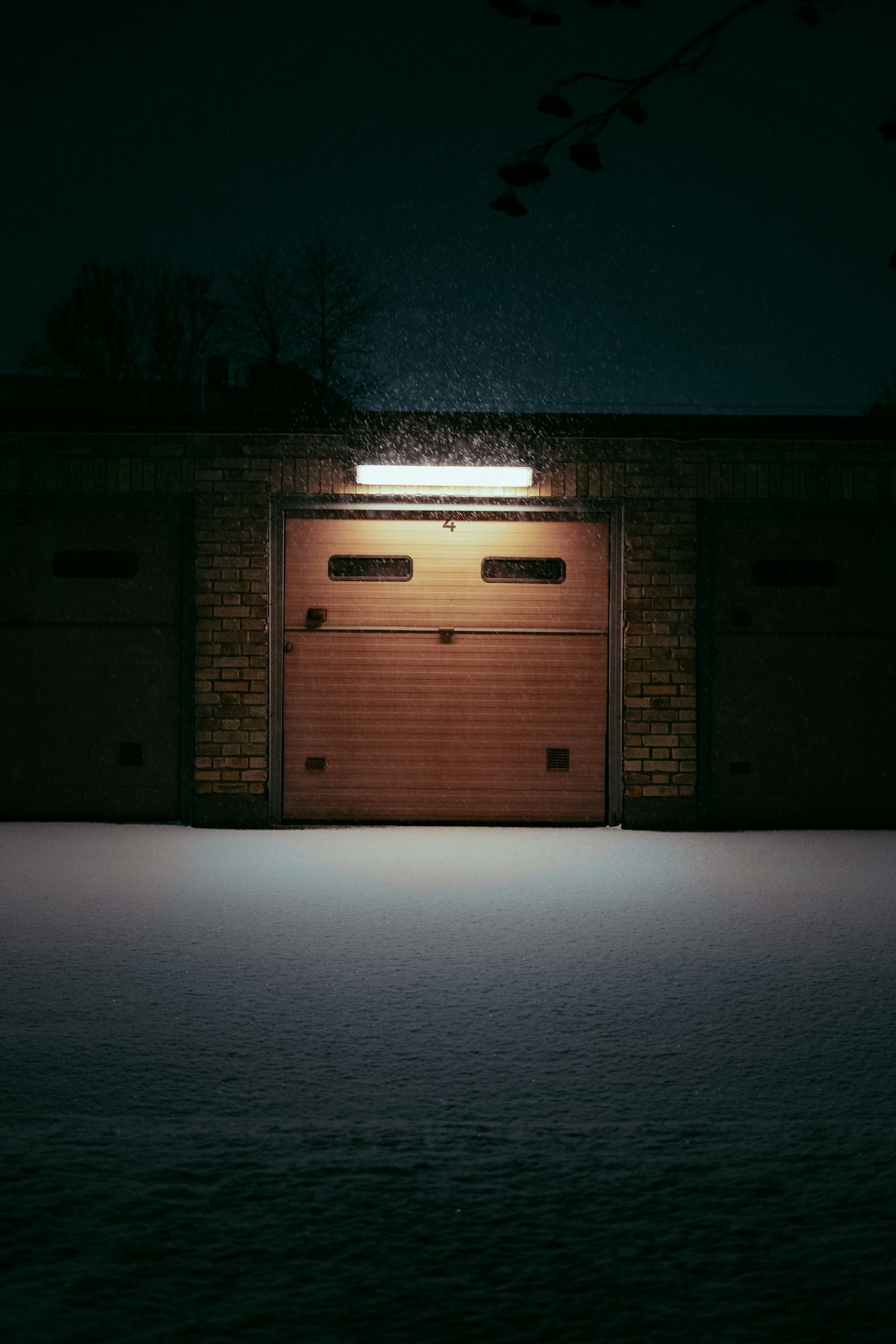
1. Garage door: the bottom seal and the corners
The overhead door is the biggest moving gap on most houses.
- Do the daylight test after dark from inside, lights off, door closed. Any line of light at the slab or the bottom corners is a way in.
- Look at the rubber. Rubber wears, cracks in the cold, and lifts when a Chinook swings the temperature. A seal that no longer meets the slab is decoration.
- Check the corners where the door meets the jamb. That is where the seal usually gives up first.
- A seal has to meet the slab where it dips, not only where it is level.
Replacing a worn bottom seal is a homeowner job. A slab that has heaved, or a gap the new seal cannot close, is a visit.
2. The door from the garage into the house
Fit door sweeps that actually kiss the threshold, including the garage man-door.
Treat this door as the second line. If the garage is open, this door is the only thing between a mouse and the kitchen. Do the same daylight test: lights on in the garage, lights off in the house, look at the bottom and the hinge side.
3. Foundation and grade
Walk the perimeter at dusk with a flashlight at grade. Look for about 6 mm of daylight at utility penetrations and where cladding meets the foundation.
Also look for:
- Cracks where the grade meets the foundation
- Gaps where siding or stucco stops short of the concrete
- Weeps that were never baffled
If you can lift the deck or step where it meets the house, look. That cavity is a highway.
4. Pipes, cables and vents
Pack pipe sleeves with copper mesh and a sealant that moves.
Screen dryer, bath, and HRV exhausts with metal, not plastic.
Check every place something leaves the house: the gas line, the hose bib, the A/C line set, cable and phone entries. A collar that has pulled away from the wall is a gap. Make sure any screen still lets the vent do its job; a dryer vent has to breathe.
5. The roofline: brick–soffit seam and garage roofline
Most people only look at the foundation. In Calgary the hole is often twenty feet up, where brick meets soffit. Brick does not move. Soffit and fascia do. Freeze-thaw and Chinooks open a hairline along that seam, and the overhang keeps it dry.
- Use binoculars from the ground first.
- Look for droppings, chewed soffit, a panel pulling off the brick, and a dark rub stain at one slot.
- Check the garage roofline. That junction is usually finished last and sealed least.
- A ladder only if the footing is honest.
The full field guide is the brick–soffit seam.
6. Materials that survive freeze-thaw, and what fails
Calgary punishes cheap exclusion. What lasts:
- Stainless or galvanized mesh, or copper mesh, packed into the gap
- A sealant that moves with the assembly
- Metal vent screens
- Sweeps and seals that meet an uneven slab
What fails:
- Acrylic caulk. Use a sealant that moves with the joint instead.
- Foam alone. Foam is not a barrier. Mice chew through it, and freeze-thaw reopens last year's foam.
- Plastic vent screens
- Steel wool or foam stuffed into the one hole you can reach. Mice pull it, chew around it, or move one panel over.
Nothing you install is permanent here. Check the same joints every fall.
Mallis treats exclusion as a distinct step, not a finish: the inspection identifies the openings; the exclusion closes them with materials the animal cannot gnaw or pull. Acrylic caulk and expanding foam alone fail that test.
7. Stop and book if…
Stop if you cannot name the assembly.
Traps are for the population already inside. They are not rodent-proofing. Two winters running means the envelope is the job, not another station.
Stop and book when you hear ceiling traffic, see droppings every morning, or the gap is in a rain-screen or rim joist you should not open from a ladder.
Also stop if the gap is on the roofline and the footing is not honest, or if mice are active inside right now. Sealing first and hoping they leave is how people close the house and still hear the ceiling for two weeks. Treat what is inside, then close the joint. The longer version is Mice are a building problem, not a trap problem.
That visit is mouse removal, typically $100–$1,500 depending on the severity of the infestation and the scope of exclusion, GST extra. Inspection is complimentary when you proceed with the recommended service. Ranges.
Checklist table
| Location | What to look for | DIY fix | When it is a visit |
|---|---|---|---|
| Garage overhead door | Daylight at the bottom or corners; rubber that is cracked or lifted | Replace the bottom seal so it meets the slab | Slab has heaved; the seal cannot close the gap |
| Garage-to-house door | Daylight at the bottom or hinge side | Fit a sweep that kisses the threshold | Frame or threshold is damaged |
| Foundation and grade | About 6 mm of daylight where cladding meets concrete; cracks at grade | Copper or stainless mesh plus a sealant that moves | Gap runs behind cladding or into a rain-screen |
| Deck ledger and steps | A cavity where the deck meets the house | Look, and close small gaps you can name | You cannot see where the cavity goes |
| Pipes and cables | Collars pulled away from the wall | Copper mesh plus a sealant that moves | Gap is in the rim joist |
| Dryer, bath, HRV vents | No screen, a plastic screen, a broken flap | Metal screen that still lets the vent breathe | Vent is out of reach or the hood is damaged |
| Brick–soffit seam | Droppings, chewed soffit, a rub stain, a panel pulling off | Binoculars only | Any repair you need a ladder for without honest footing |
| Garage roofline | Gaps where the roof meets the wall | Binoculars only | Same as above |
| Inside the house | Droppings every morning; ceiling traffic | Snap traps on the run | Two winters running, or traffic in the ceiling |
Questions
Can mice get in under my garage door? How do I tell?
Yes, if there is a gap. Close the door at night, turn the lights off inside, and look for daylight along the bottom and at both corners. A worn or lifted bottom seal and gaps at the corners are the usual failures. If you see light, a mouse can find it.
Will a new garage door seal stop mice, or will they chew through it?
A new seal helps if it actually meets the slab along its whole length. Rubber alone wears, lifts in a Chinook, and can be chewed. Check it every fall. And do not forget the door from the garage into the house; it needs its own sweep.
What should I use to seal gaps? Steel wool? Spray foam?
Foam alone is not a barrier, and steel wool stuffed in one hole is temporary. Use copper, stainless or galvanized mesh with a sealant that moves, and metal screens on vents. Skip acrylic caulk. If you cannot name the assembly, especially a rain-screen, the rim joist, or anything up a ladder, stop.
Which gaps can I close myself, and when should I call someone?
Door sweeps, the garage bottom seal, metal vent screens, and pipe sleeves at grade are homeowner jobs. Book a visit for ceiling traffic, droppings every morning, two winters in a row, or gaps in a rain-screen, the rim joist or the roofline.
Exclusion or spraying: which actually works for mice?
Spray does not keep a mouse out of an open hole. Traps and labelled bait clear what is inside. Exclusion closes the way in. Most houses need both, in that order. One mouse in a tight house may only need snap traps. See how we compare.
Sources: Mallis's Handbook of Pest Control, 8th ed. (Moreland ed.).
Close what you can tonight. For the joints you cannot name, Book this visit or text a photo to 825 747 5787. We inspect, treat what is there, and close the gaps; see Exclusion Engineering for how we spec it, or Structural Assessment if you want the whole envelope mapped first. The Gap Guarantee covers re-entry through a joint we closed and documented, during the first freeze-thaw season after the visit. It is not a whole-house seal. For what to do month by month, see the pest season guide.